 LUC
LUC
 DE
DE  EN
EN 
Use Cases
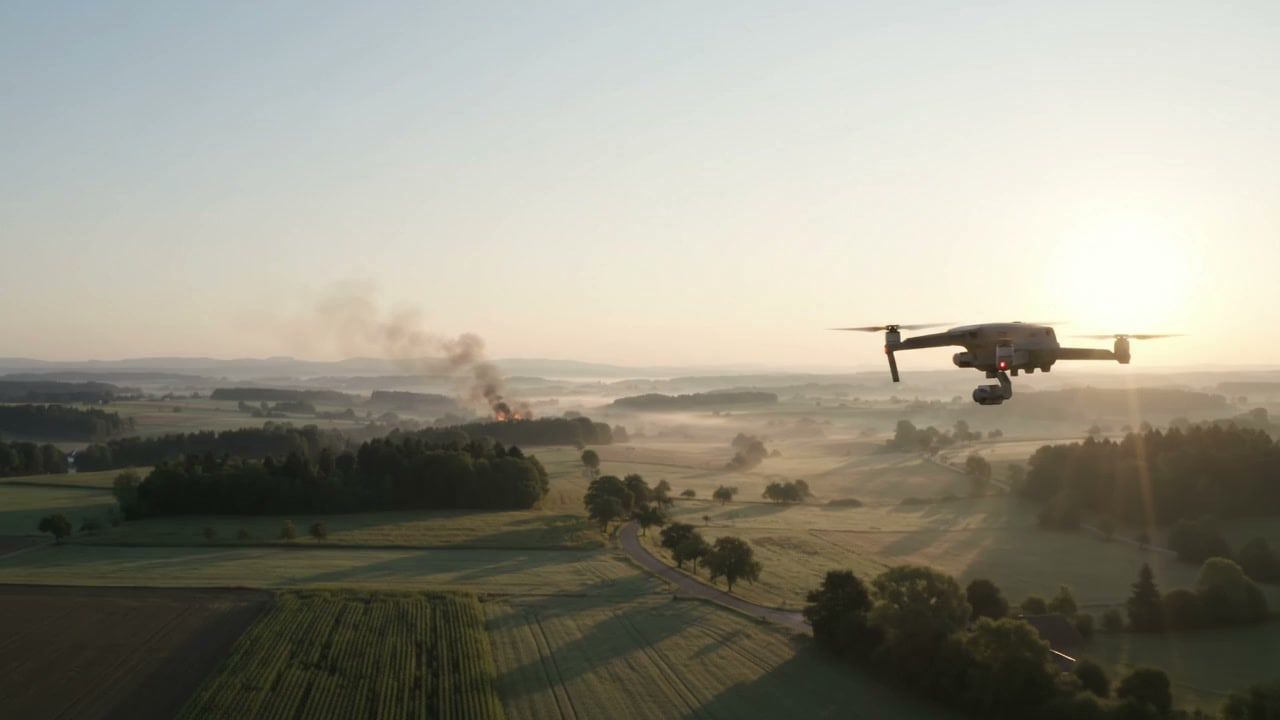
From single flights to routine operations.
In many industries, drones can do more than pilot projects. What is missing is an infrastructure that keeps them ready day after day, secures every flight legally and coordinates entire fleets. That is the infrastructure we build.
The TALOS Hub and our software are drone-agnostic. Existing drones and mixed fleets remain usable.
Overview
Seven fields of operation and an outlook
- 01 Emergency Services & Civil Protection Fire services, police and EMS: a situational picture in minutes, even where there is no building.
- 02 Industrial Monitoring & Critical Infrastructure Patrols and inspections that fly to schedule.
- 03 Aerial Surveying & Geodata A one-off survey becomes a measurement series.
- 04 Agriculture Know your crops before the damage shows.
- 05 Defence & Military Logistics Protection, logistics and medical service, relocatable and self-sufficient.
- 06 Medical & Express Logistics Minutes instead of a courier run.
- 07 Municipalities & Regions One hub, many users.
- Vision Outlook: Last-Mile Delivery Parcel delivery by air, once the cost curve tips.
Ecosystem
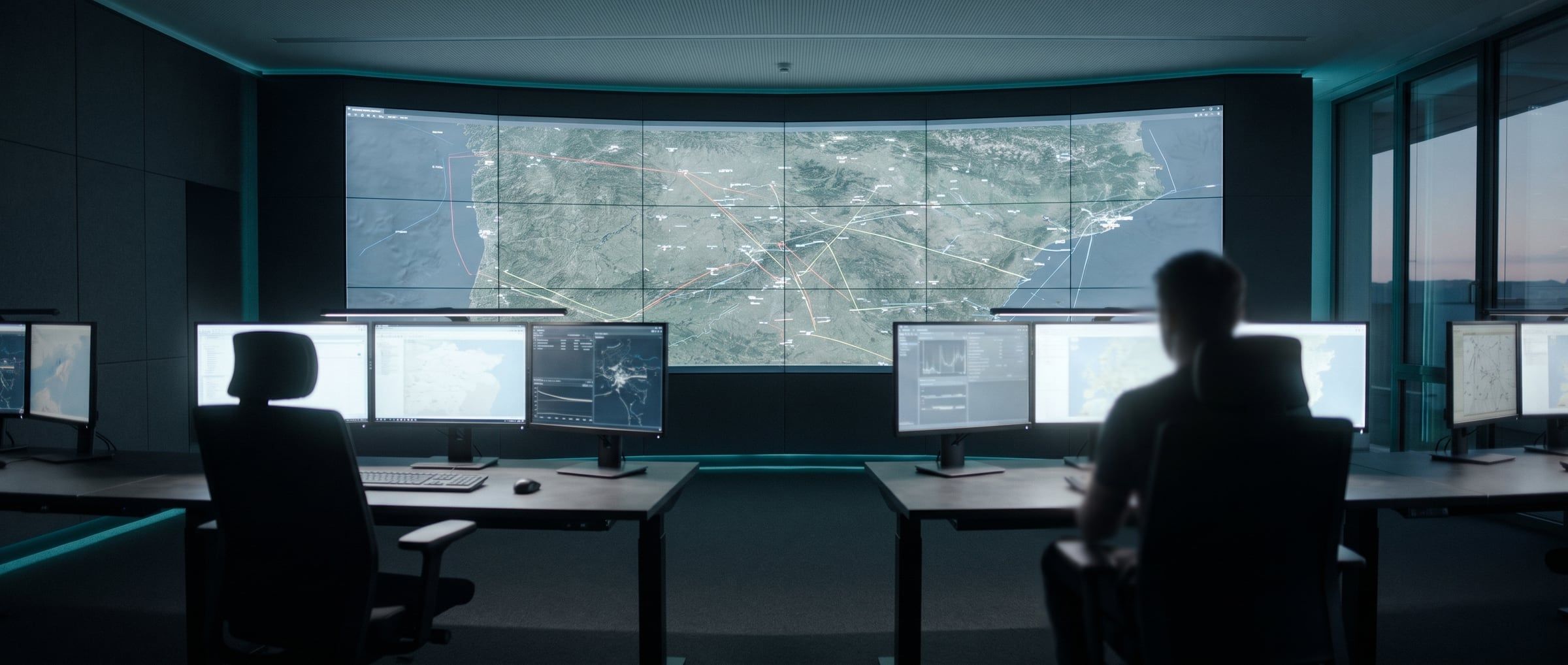
One ecosystem, seven fields of operation.
- 01
Ready on site.
The TALOS Hub keeps several drones protected, charged and ready for take-off. It can be relocated by truck and needs neither a foundation nor a grid connection.
- 02
Legally secured.
The Deconfliction & Legal Engine checks every flight against your operational authorisation before take-off and during the flight and documents the result in full. You obtain the authorisation yourself; we support you with the paperwork.
- 03
Fleets, not single flights.
Mission Planning plans operations for entire fleets and coordinates hubs and sites, connected to the U-space services of approved providers.
The software is modular and can also be used without the TALOS Hub.
01 · Emergency Services & Civil Protection
A situational picture in minutes, not once someone has fetched the drone.
Fire services, police and emergency medical services mostly use drones as single devices today: a crew brings one to the scene, sets it up and flies one aircraft. That costs time, especially in the first half hour, and as soon as a second task comes up, the second drone is missing. With a hub, several drones are permanently ready and are dispatched from the control centre.
Fire services
3
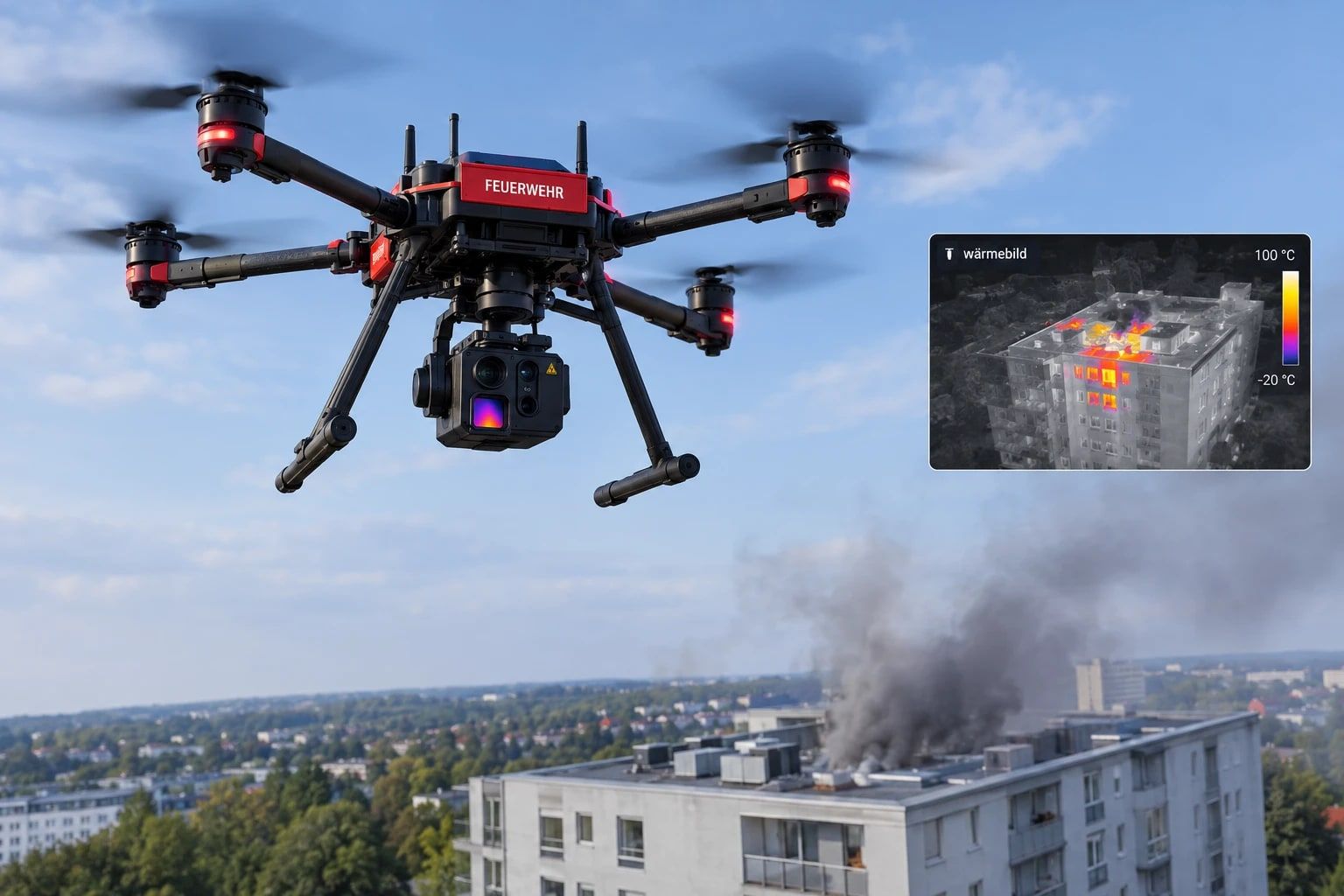
- Early wildfire detection. When the wildfire risk is high, several drones fly fixed patrol routes over the forests at risk. Smoke can be reported to the control centre with coordinates while the fire is still small.
- Structure fires. One drone shows incident command the hot spots and the spread through the roof in thermal imaging, a second keeps neighbouring buildings and the water supply in view.
- Hazardous materials. During a release, one drone stays above the scene while others follow the plume downwind. With gas detection on board, concentrations can be measured without sending a crew into the danger zone.
Police
3
- Missing persons. Mission Planning splits the search area into sectors that several drones with thermal cameras fly in parallel. At night the temperature difference between a person and the surroundings is greatest, which often makes the search most successful.
- Major events and demonstrations. Incident command sees access routes, bottlenecks and escape routes for hours without interruption. When a drone has to return to charge, the next one takes over.
- Serious road accidents. One drone documents the scene for the accident investigation, a second shows the tailback and clear approach routes for units on their way.
Emergency medical services & first responders
3
- Cardiac arrest. Every minute counts until the first defibrillation. One drone brings an AED to the first aiders while a second sends the control centre images of the scene before the ambulance crew arrives.
- Mass casualty incidents. The fleet quickly gives incident command an overview of casualty collection points, access routes and staging areas, from several angles at once.
- Water and mountain rescue. On lakes, rivers or in the mountains, several drones search the area in parallel. Once a person is found, a drone drops a rescue buoy until the water or mountain rescue team arrives.
Civil protection
3
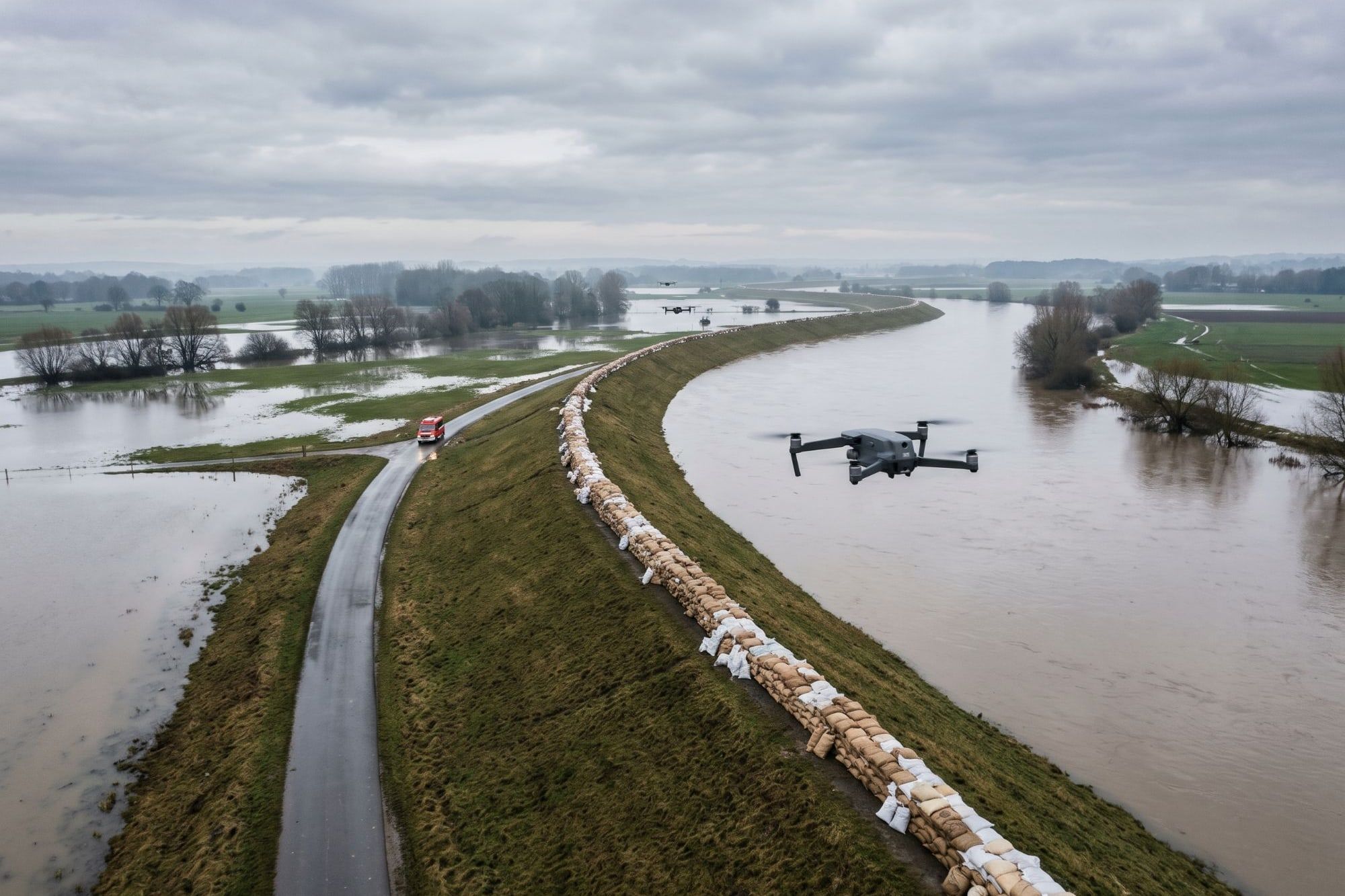
- Floods. The drones check dykes and gauging stations along the whole section in fixed rounds. Seepage and overtopping are spotted early, even at night.
- Situational picture for the crisis team. After a storm or landslide, the fleet captures the whole affected area. Within a few hours the crisis team works with an up-to-date orthophoto instead of individual reports.
- Cut-off communities. When roads are flooded or buried, the drones bring medicines, insulin or radios to the affected villages.
What changes with TALOS
-
Ready, not requested.
The drones stand ready in the hub and can take off from standby in under 20 seconds.
-
Controlled from the control centre.
Hub and operation are controlled and monitored from the control centre or remotely. Nobody has to set up a drone on site.
-
Where the incident is.
Relocatable by truck and operational within hours, for exercises, major events and long-running incidents.
02 · Industrial Monitoring & Critical Infrastructure
Patrols that fly to schedule.
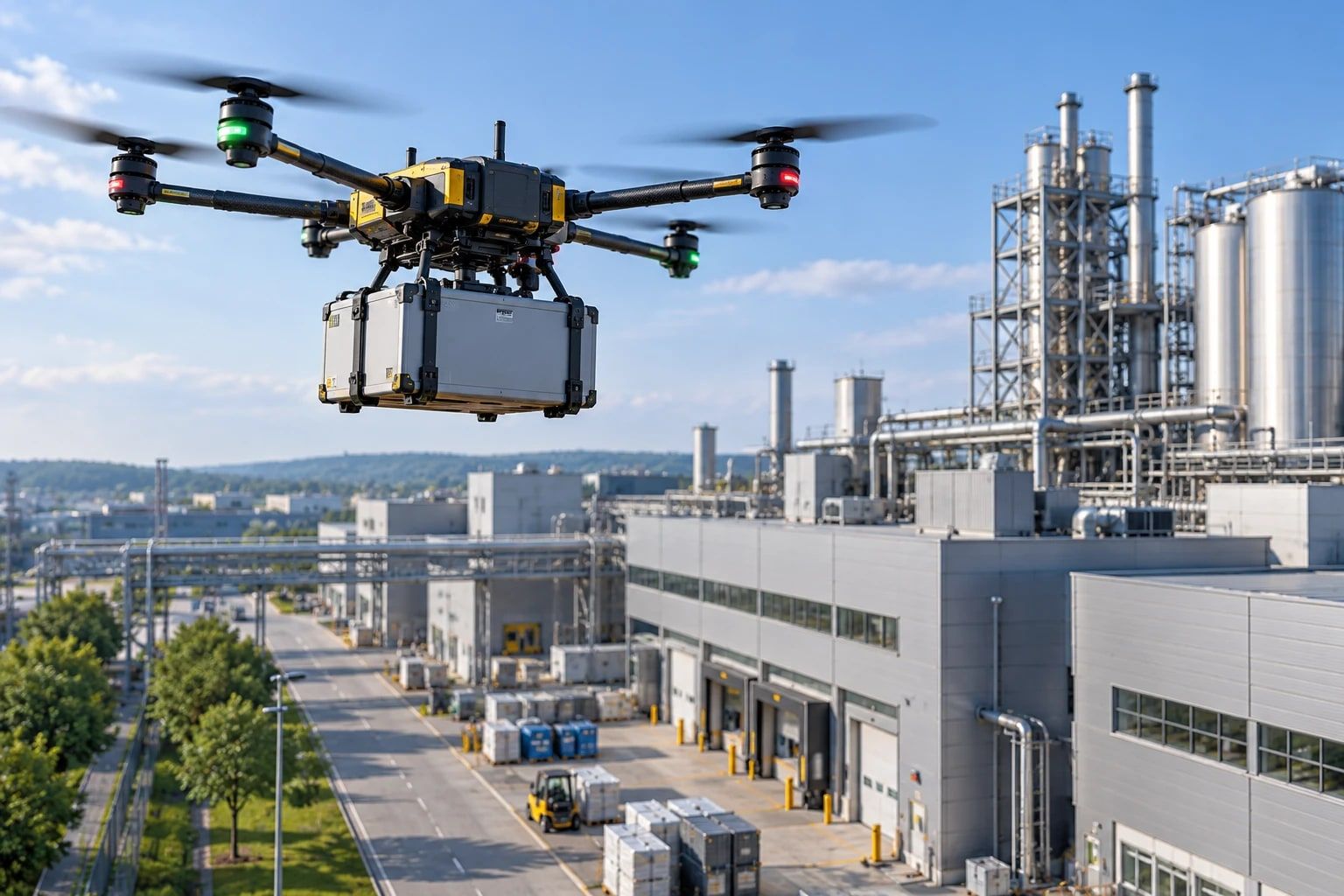
Plant sites, chemical parks, energy facilities and transport routes are inspected today on foot, by vehicle or with individually commissioned drone flights. That ties up staff, leaves gaps between patrols and produces data that can hardly be compared.
Typical operations
3
- Perimeter and site security. On large plant and port sites, drones fly fixed patrols along fences and access roads. When a detector raises an alarm, a second drone heads straight to the spot and sends images to site security while the patrol continues.
- Pipelines and utility corridors. Long corridors for gas, oil, water or district heating are split into sections and flown by several drones at once. Leaks show up through methane sensors, in thermal images or as discoloured vegetation along the route.
- Incidents in chemical parks. During an operational incident, several drones watch the plant and its surroundings at the same time and give the plant fire brigade and authorities images and readings from the danger zone.
What changes with TALOS
-
Permanently on site.
Patrol flights run to a fixed schedule, also at night and at weekends, as far as your authorisation allows.
-
Comparable data.
Same route, same perspective, week after week. Changes stand out before they turn into damage.
-
Verifiable.
Every flight is checked against the authorisation and documented, traceable for authorities, insurers and auditors.
03 · Aerial Surveying & Geodata
Survey what changes.
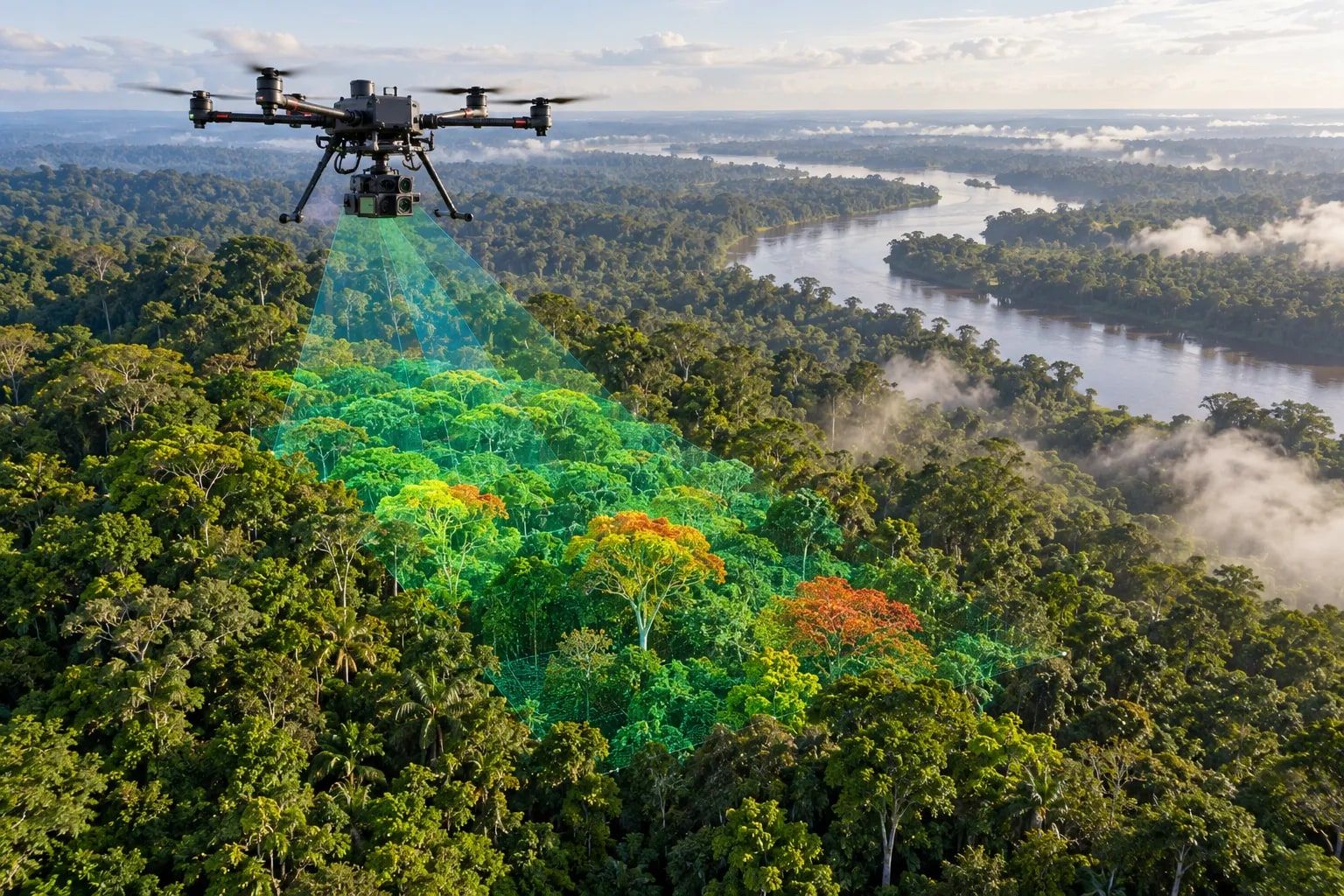
Aerial surveying is faster than surveying on the ground and reaches terrain that is hard to access. With a single drone, however, large areas hit limits: the survey takes days, and by the end the light, the weather or the site itself has changed. A fleet captures the same area in a fraction of the time and under the same conditions.
Typical operations
3
- Large-area terrain models. Municipalities, grid operators and planning offices get orthophotos, 3D models and digital terrain models covering several square kilometres, with a ground resolution of a few centimetres. Mission Planning splits the area into flight blocks that several drones fly at the same time.
- Several sites on the same date. Operators of quarries, gravel pits or construction sites capture all sites on the same day, for example for the monthly volume calculation.
- Same conditions across the whole area. When a large area is captured in one go, sun angle and shadows match in every image. That saves rework in processing and keeps measurement series comparable.
What changes with TALOS
-
A series, not a snapshot.
Same flight route, same parameters, at fixed intervals. Results stay comparable over months.
-
Large areas in little time.
Mission Planning splits an area across several drones instead of flying it with one drone in sequence.
-
Your tools stay.
The data is evaluated in your existing surveying or GIS software.
04 · Agriculture
Know your crops before the damage shows.
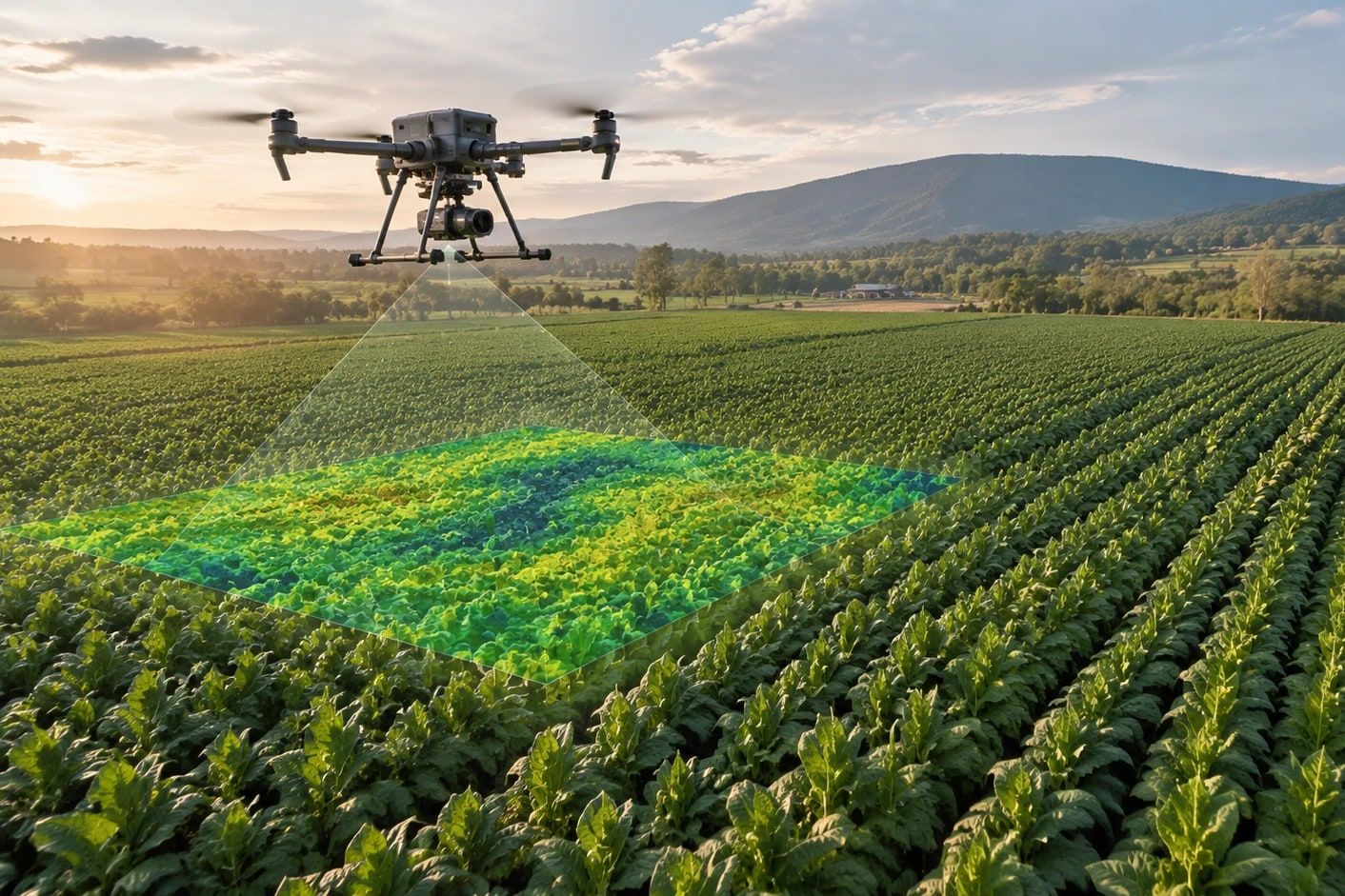
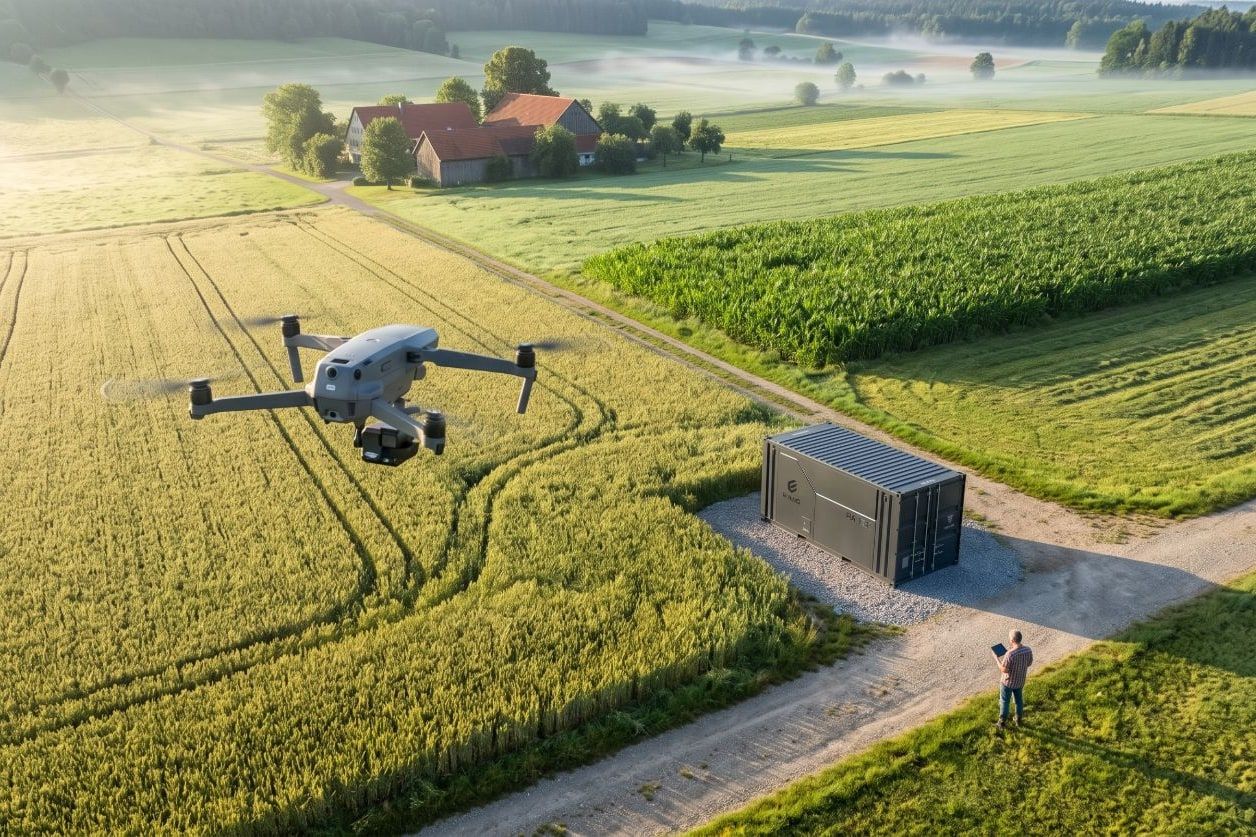
Drones have long arrived in agriculture, but mostly as single devices that someone has to bring to the right field at the right time. Many tasks depend on narrow time windows: before mowing, after a storm, at the right growth stage. A hub with a fleet covers such peaks for one farm or an entire region.
Typical operations
4
- Fawn rescue before mowing. Fawns crouch in tall grass when threatened and are caught by the mower. Several drones with thermal imaging search the meadows in the cool early hours, before the sun warms the ground, and mark the spots for the helpers.
- Crop monitoring. Multispectral images use vegetation indices such as NDVI to show where plants suffer from drought stress or nutrient deficiency. The maps are only comparable if all fields are flown at the same growth stage.
- Trichogramma against the European corn borer. The parasitic wasps have to be released at the start of the moth flight. Several drones distribute the capsules across many maize fields within this short window.
- Damage documentation. After hail or storms, the drones capture affected fields georeferenced before the crops straighten up again. Farmer, insurer and assessor work with the same images.
What changes with TALOS
-
One hub, many farms.
Machinery rings, contractors or cooperatives can share a fleet and split the costs.
-
Cover seasonal peaks.
Short-term rental for mowing and harvest instead of owning drones that sit idle for the rest of the year.
-
Make the most of time windows.
Mission Planning spreads flights across all fields so that narrow windows such as the early hours before mowing are actually enough.
05 · Defence & Military Logistics
Situational awareness and supply. Relocatable, self-sufficient, European.
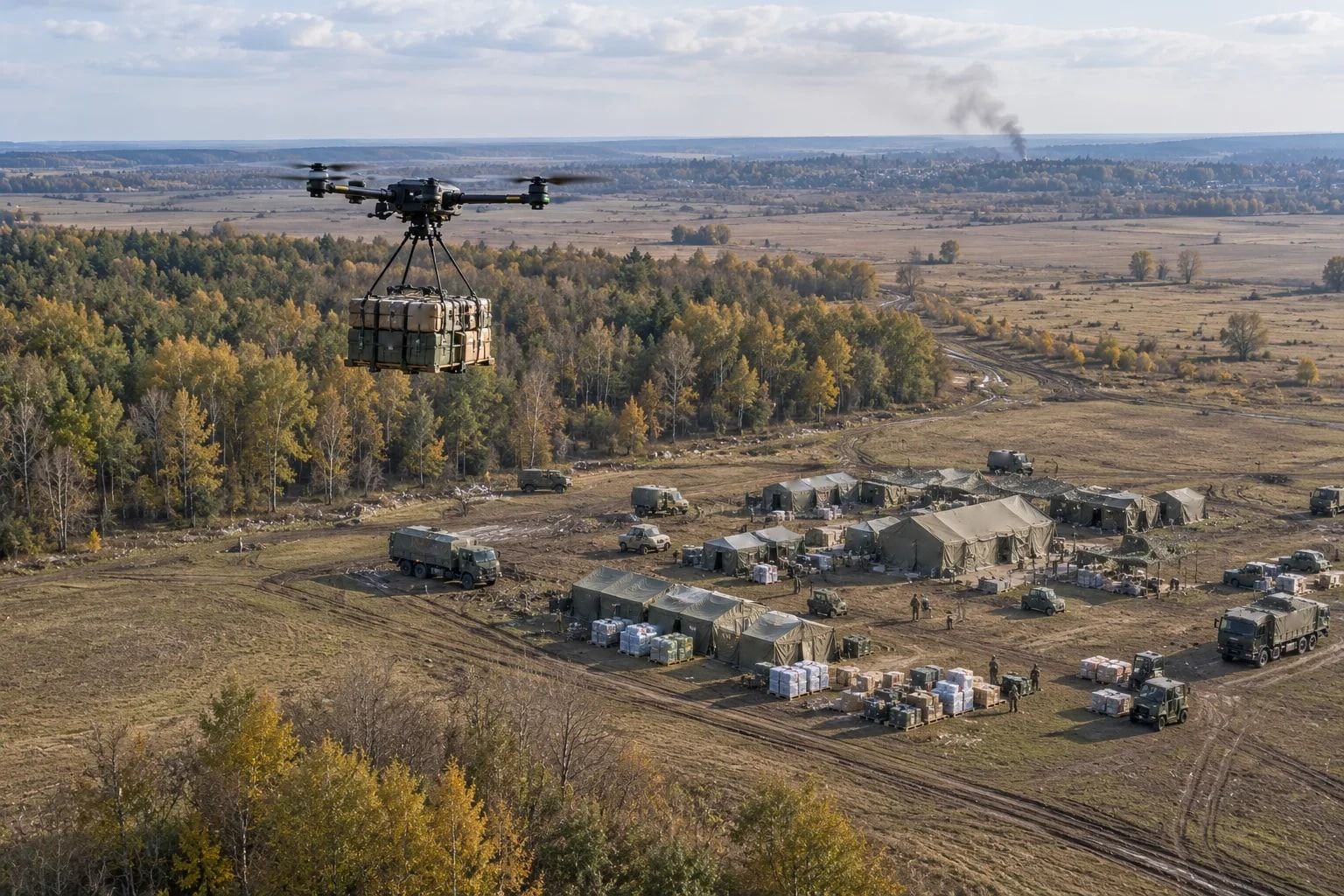
Armed forces use drones in large numbers today, yet the infrastructure behind them is often improvised. Devices are transported, charged and prepared one by one, and supply runs tie up staff and vehicles. TALOS brings both into one relocatable unit, with a clear focus on defensive and supporting tasks. Whether field camp, relocation or civil support at home: a fleet stands ready where the forces are.
Reconnaissance & protection
4
- Area and site protection. Field camps, military sites and staging areas are watched from the air around the clock. The drones fly in rotation so that there are no gaps between patrols.
- Situational picture for the staff. The staff gets a continuous picture from several directions without soldiers having to prepare or transport drones.
- Convoy overwatch. March and supply convoys are accompanied from the air along the route. The drones hand over the overwatch to one another on the way.
- CBRN reconnaissance. With sensors for chemical and radiological hazards, several drones explore a suspicious area and narrow down the affected zone without sending a CBRN defence team in.
Military logistics
3
- Supply on the last mile. Medical supplies, spare parts and consumables reach several units in parallel, without tying up vehicles and drivers.
- Plannable connections. Recurring supply flights between field camp, depot and outposts run to a fixed schedule.
- Supply during relocation. When a unit changes location, the hub follows by truck. As soon as it is set up again, supply from the air continues.
Medical service
2
- Blood and medicines. Blood products and medicines get from the medical facility to forward forces faster, on several routes at once.
- MASCAL. In a mass casualty situation, the fleet gives medical personnel an overview and brings dressings and medicines to where they are missing.
Exercises & civil support
2
- Exercises. Training with real fleet operations, for example through short-term rental for the duration of the exercise.
- Civil support. During floods, wildfires or major incidents, the same infrastructure supports the civil authorities.
What changes with TALOS
-
Relocatable.
Relocatable by truck and operational within hours. No foundation or grid connection required.
-
Built to be robust.
Designed for operation from −25 °C to +55 °C.
-
Made in Europe.
Developed in Baden-Württemberg with a European supply chain.
06 · Medical & Express Logistics
Minutes instead of a courier run.
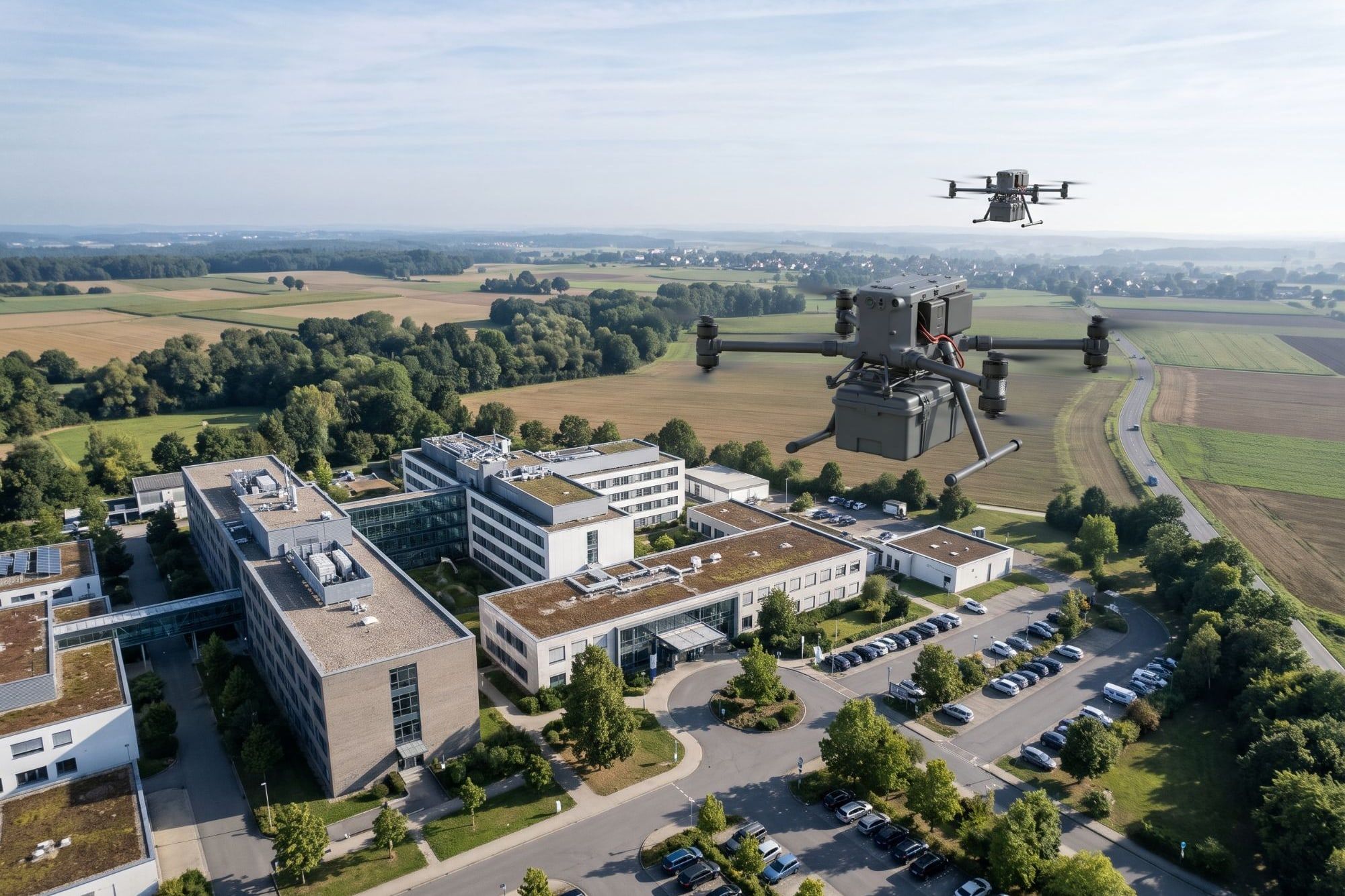
Lab samples, blood products and medicines travel today by taxi or courier between hospitals, laboratories and practices, often over long distances in rural areas. In industry, a production line stands still until a spare part arrives. Single drone routes rarely solve this economically. A network with hubs at both ends can.
Typical operations
3
- Hospital groups and laboratories. Lab samples and blood products travel between hospital sites and the central laboratory. Several drones serve the routes in parallel instead of a courier driving one round.
- Supply across the region. Pharmacies and hospitals supply care homes and remote locations with medicines and emergency supplies, also outside courier hours.
- Spare parts across plants. When a production line stops, the spare part comes from the central warehouse or the neighbouring plant by drone instead of by special delivery. Between several plants, such flights run in parallel.
What changes with TALOS
-
Hubs at both ends.
The drones are housed protected and charged, so a flight can start at any time.
-
Bundle orders.
Mission Planning plans recurring routes and distributes orders across the fleet instead of preparing each flight individually.
-
Routinely beyond visual line of sight.
The Deconfliction & Legal Engine checks every flight against the operational authorisation. That is the prerequisite for a reliable scheduled service.
07 · Municipalities & Regions
One hub. Many users.
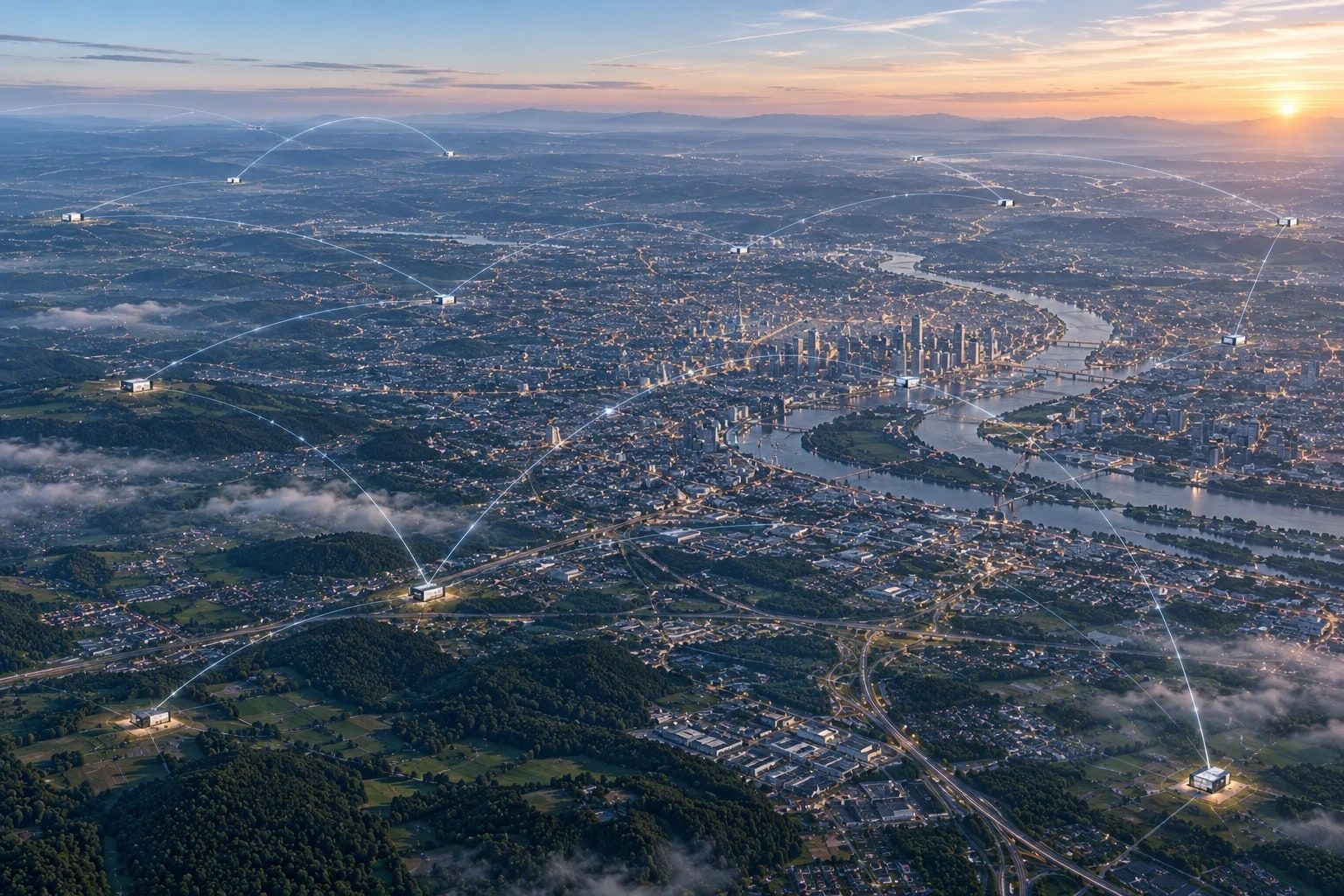
For a single municipality, farm or business, its own drone infrastructure rarely pays off. For a region it does, if several users share the capacity. Shared hubs lower the barrier to entry and bring drones to places where they have been missing so far.
Typical operations
4
- One fleet for the whole district. Fire brigade, municipal works, farmers and businesses share the same fleet. Mission Planning makes sure a fire brigade operation takes priority over a scheduled bridge inspection.
- Fixed capacity. Recurring tasks such as road and bridge inspections or checks of waterways and green spaces run to a fixed schedule, alongside all other operations.
- Temporary capacity. For seasonal work, events or construction projects, additional drones are added for a limited period.
- A network, not an island. Several hubs in a region extend the range and connect places into a network instead of serving each municipality on its own.
What changes with TALOS
-
Share capacity.
Mission Planning allocates a hub's capacity to several users and purposes.
-
Everyone flies under their own authorisation.
The Deconfliction & Legal Engine checks and documents every flight within the respective authorisation.
-
Flexible financing.
From purchase and leasing to short-term rental.
Outlook: Last-Mile Delivery
Parcel delivery by air, once the cost curve tips.
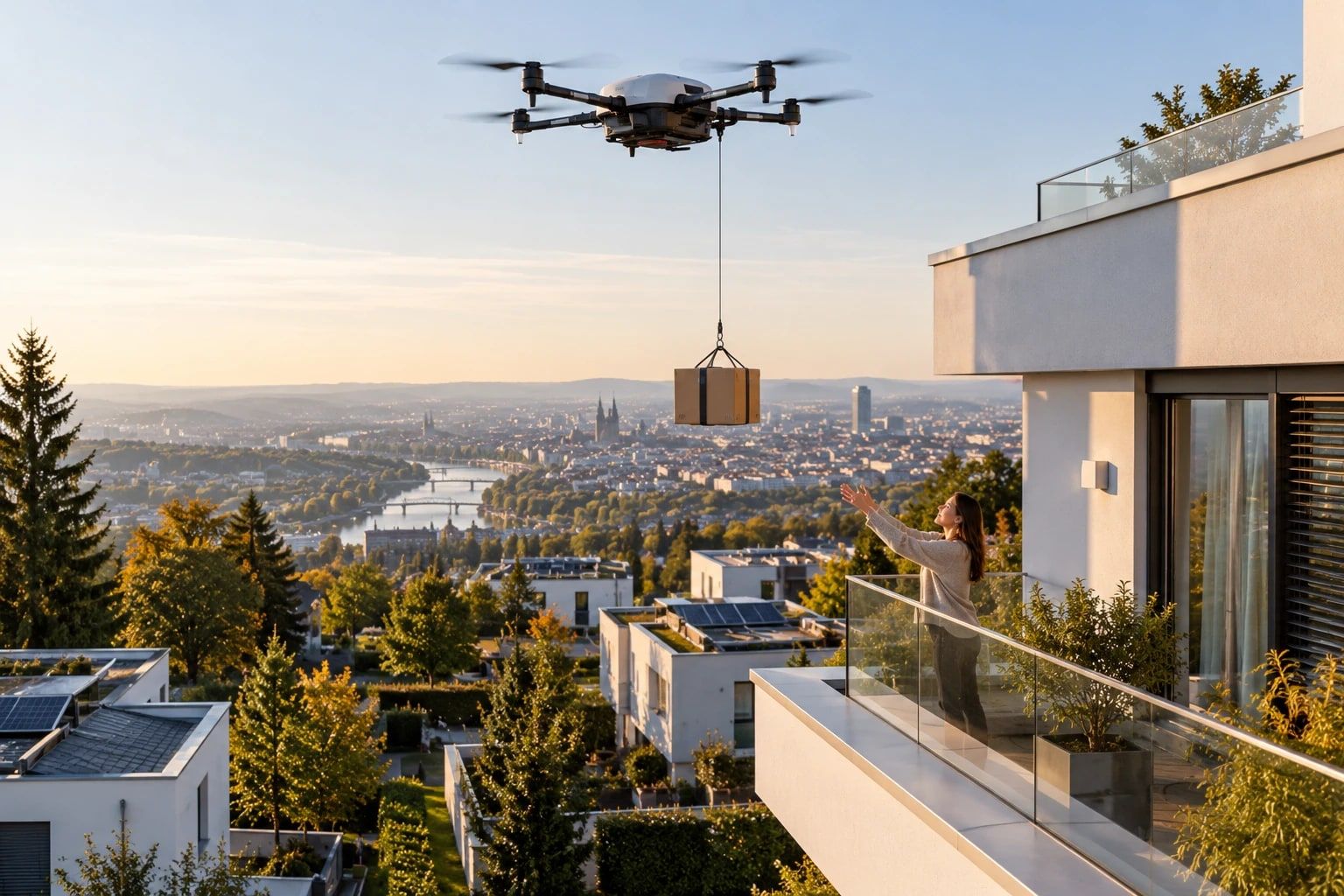
Parcel volumes are rising and delivery staff are becoming scarce. Whether drones become a lasting part of delivery in suburbs and rural areas depends less on the drone than on the infrastructure behind it. Once charging, planning and authorisation are automated, the cost per flight falls significantly. That is our long-term goal, not a short-term product.
Your field is not listed?
We are looking for pilot partners who want to take the step from single drones to fleets, including in industries not yet listed here. Tell us what you want to fly.
TALOS is currently under development. The operations described are target applications; technical specifications are design targets from the requirements specification.